
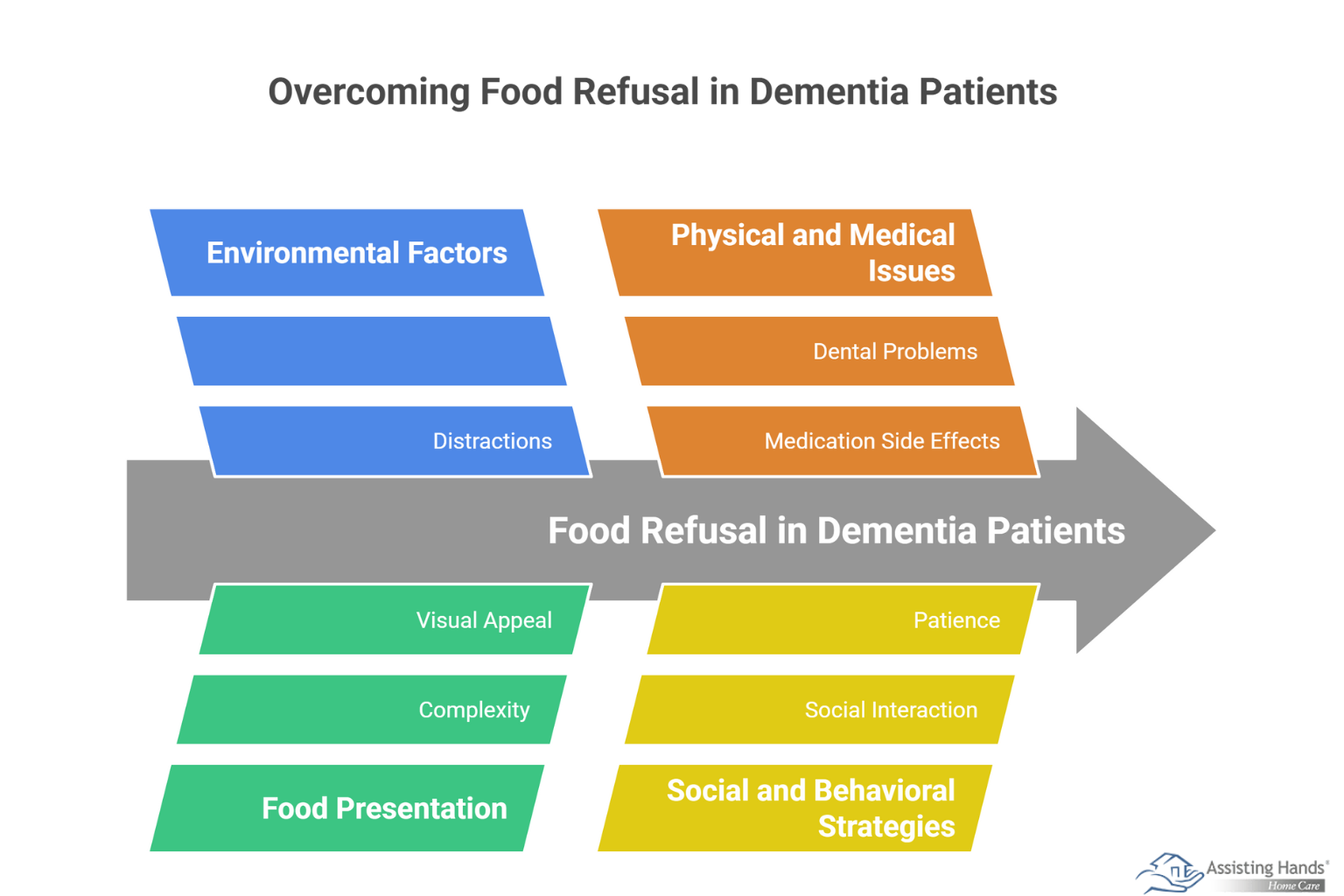
When caring for a senior loved one with dementia, mealtimes can become challenging as the condition progresses and affects appetite, recognition of food, and eating behaviors. Food refusal is common among dementia patients and can lead to malnutrition, weight loss, and decreased quality of life. Understanding effective strategies to encourage eating can help caregivers provide better nutritional support and maintain dignity during meals.
Create a Calm and Familiar Eating Environment
The dining atmosphere plays a crucial role in encouraging dementia patients to eat. A peaceful, distraction-free environment can reduce confusion and anxiety around mealtimes.
- Remove televisions, radios, and other noise sources during meals.
- Use familiar plates, utensils, and cups from your loved one’s own home when possible.
- Ensure adequate lighting so food is clearly visible.
- Keep the table setting simple with minimal decorations.
- Maintain a comfortable room temperature.
- Consider playing soft familiar music from your loved one’s era if it seems to help him or her relax.
Consistency in timing and location also helps you establish routines, which many dementia patients find comforting and easier to navigate.
Simplify Food Choices and Presentation
Overwhelming food options or complex presentations can confuse dementia patients and lead to food refusal. Simplifying meals makes eating more manageable and less stressful.
- Serve one course at a time rather than presenting the entire meal at once.
- Use plates with high-contrast colors to help food stand out.
- Cut food into bite-sized pieces to reduce choking risks.
- Offer foods that can be eaten with hands if utensils become difficult to use.
- Present familiar foods your loved one enjoyed before the diagnosis.
- Limit choices to two options maximum to avoid decision paralysis.
Visual cues matter significantly—colorful, appetizing foods are more likely to stimulate interest than bland or unrecognizable dishes.
Caring for a loved one with dementia can be extremely challenging, and a compassionate, professional caregiver can be a wonderful source of support. If your elderly loved one is living with a serious medical condition and needs help managing the tasks of daily living, reach out to Assisting Hands Home Care, a home care agency you can trust. Our caregivers are available 24/7, there are no hidden fees in our contracts, and we offer a 100% satisfaction guarantee on all of our in-home care services.
Address Physical and Medical Factors
Various physical issues can contribute to food refusal in dementia patients. Identifying and addressing these underlying problems often enhances eating habits.
- Check for dental problems, ill-fitting dentures, or mouth pain.
- Monitor for medication side effects that might affect taste or appetite.
- Ensure proper positioning during meals—sitting upright helps with swallowing.
- Watch for signs of dysphagia (difficulty swallowing) and consult healthcare providers.
- Consider whether constipation or other digestive issues are affecting appetite.
- Evaluate if depression or anxiety is contributing to food refusal.
Regular medical checkups help you identify treatable conditions that may be impacting your loved one’s willingness or ability to eat.
Use Social and Behavioral Strategies
Dementia patients often respond well to social interaction and gentle encouragement during mealtimes. These approaches can make eating feel more natural and enjoyable.
- Eat together—seeing others eat can trigger your loved one’s own eating response.
- Offer gentle verbal prompts like “take a bite” or “this tastes good.”
- Use hand-over-hand guidance to help your loved one remember how to use utensils.
- Be patient and allow plenty of time for meals without rushing.
- Try offering favorite foods or comfort foods from your loved one’s past.
- Consider your loved one’s cultural food preferences and traditional family recipes.
- Praise and encourage any eating attempts, no matter how small.
Avoiding arguments or force-feeding is essential, as these approaches typically increase resistance and stress.
Eating issues in the advanced stages of dementia can make caring for aging adults increasingly challenging. One of the most challenging tasks of helping an elderly relative age in place safely and comfortably is researching agencies that provide senior care. Richmond families can turn to Assisting Hands Home Care for reliable, high-quality in-home care for aging adults. We offer 24-hour care for seniors who require extensive assistance, and we also offer respite care for family caregivers who need a break from their caregiving duties.
Modify Textures and Enhance Flavors
As dementia progresses, your loved one may have difficulty chewing or swallowing certain textures. Adapting food consistency while maintaining nutritional value ensures adequate intake.
- Offer softer foods like mashed potatoes, yogurt, or well-cooked vegetables.
- Consider pureed foods if chewing becomes difficult.
- Add gravies or sauces to make dry foods easier to swallow.
- Enhance flavors with herbs and spices, as taste perception may be diminished.
- Provide nutritional supplements in preferred flavors if regular meals become insufficient.
- Try finger foods or smoothies if traditional meals are consistently refused.
- Ensure adequate hydration by offering frequent small sips of preferred beverages.
Working with a registered dietitian who has experience with dementia care can help you develop personalized nutrition plans that address your loved one’s individual needs and preferences.
Even when families have the best intentions, caring for a senior loved one with dementia can be challenging. Fortunately, Assisting Hands Home Care is here to help. We are a leading provider of dementia care. Richmond families can take advantage of our flexible and customizable care plans, and our caregivers always stay up to date on the latest developments in senior care. To create a comprehensive in-home care plan for your loved one, call us today.